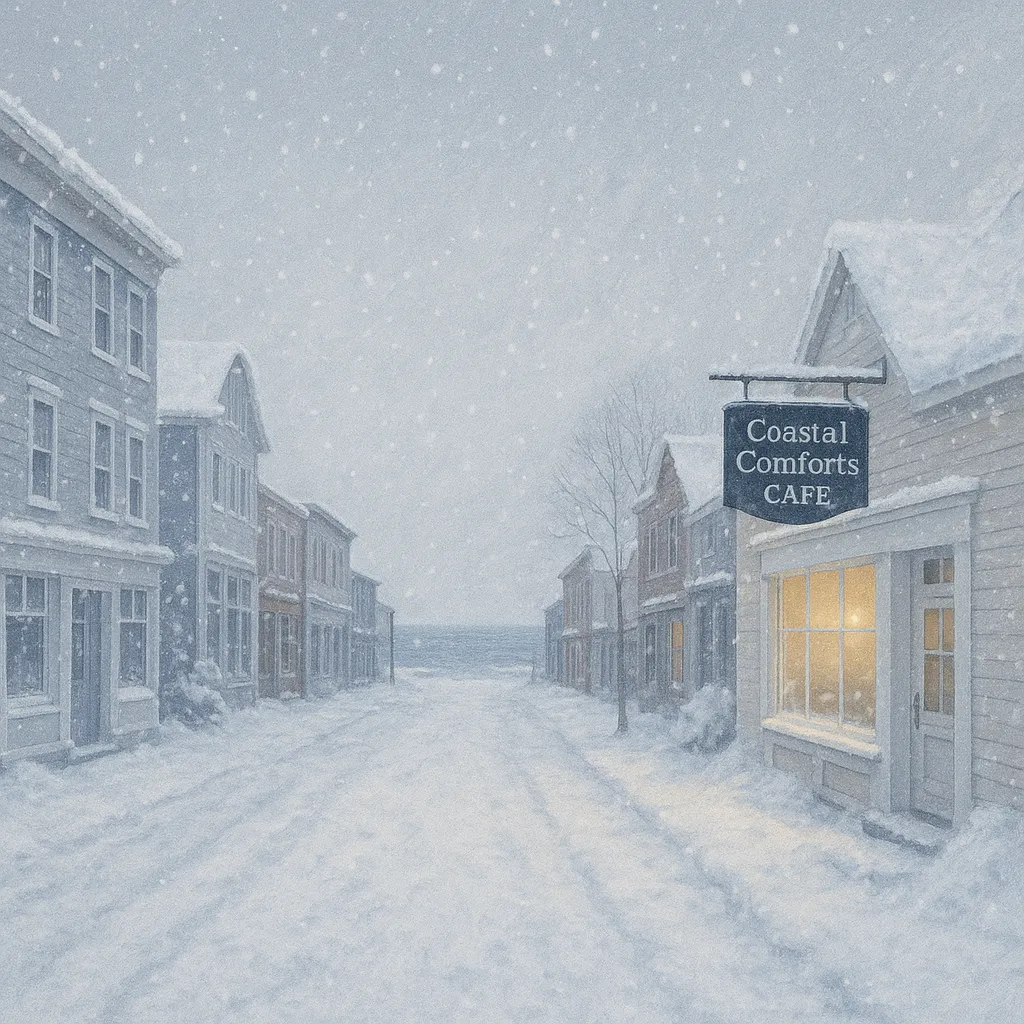
Winter on the New England Coast
Coastal Pilgrimages | Winter on the New England Coast
The coastline in winter speaks in a different register. The colors soften, the air clears, and the rhythm of the sea slows to match the season. To walk here in the quiet months is to take part in a kind of pilgrimage. There are no crowds, no itineraries to keep, only the long, deliberate pace of a traveler learning to listen again.
A pilgrimage, after all, is not defined by the distance one travels but by the depth of attention given along the way. On the New England coast, that attention is rewarded at every turn: in the way frost laces the dune grass, how the tide curls around ice-slick rocks, how a single gull’s call cuts through the cold. These moments are small, but they fill a traveler’s senses entirely.
The Journey North to South
The eastern shoreline in winter feels both familiar and newly wild. Beginning in Kennebunkport, Maine, winding through Ogunquit, and ending in Newport, Rhode Island, each town holds its own version of stillness. The drive itself becomes part of the rhythm: narrow roads that trace the edges of the continent, the sea flashing between pine trees and salt marsh.
Kennebunkport, Maine | The Quiet Harbor
In summer, Kennebunkport buzzes with tourists and boat traffic. In winter, it exhales. The harbor lies calm, a scatter of working boats nodding in their slips. The air smells faintly of salt and pine, and when snow falls, it muffles everything except the creak of dock lines and the distant sound of waves beyond the breakwater.
This is a town made for walking in cold weather. You might start at Goose Rocks Beach, where seafoam clings to frozen sand and the Atlantic rolls in slow and deliberate. A few gulls linger near the tideline, their reflections sharp against the silver water. In the woods beyond town, the Kennebunkport Conservation Trust trails lead through snow-covered spruce and over frozen creeks.
The science of the scene is quietly alive: cold water holds oxygen better than warm, and the winter ocean hums with microscopic life even when it appears still. You can almost sense it, that unseen motion beneath the surface — a reminder that rest is not the same as dormancy.
When the cold finally finds its way into your bones, the town offers warmth in old-fashioned forms. A bowl of chowder steaming at The Pilot House. The glow of lamplight through a frosted window. Conversations that move slowly, like the tide itself.
Ogunquit, Maine | The Path Between Sea and Sky
Further south, the coastline grows more dramatic. Ogunquit’s Marginal Way winds for a mile along cliffs and coves, a narrow ribbon between the Atlantic and the sky. In summer it’s crowded with visitors. In winter, you may have it to yourself. The wind comes clean off the ocean, carrying salt and the faint cry of eiders floating below the rocks.
Walking here feels meditative — the repetition of waves, the sound of boots on gravel, the constant negotiation between edge and safety. Even the word Ogunquit, from the Abenaki meaning “beautiful place by the sea,” feels like part of the rhythm.
The cliffs reveal geology in cross-section: layers of ancient stone folded by pressure and time. Frost forms in fine crystals along cracks, the sea carving again what glaciers once shaped. Every turn of the path tells a story of endurance.
When the sun drops behind the town, light settles in soft amber across the water. Locals retreat to warm cafés near Perkins Cove, where windowpanes glow and conversations rise in quiet cadence. There is comfort in the nearness of others who choose to stay by the sea when most have left.
Newport, Rhode Island | The Architecture of Stillness
By the time you reach Newport, the coast broadens and softens. Mansions line the cliffs, remnants of a gilded era now watched over by gulls. The Cliff Walk is open year-round, and in winter its path feels almost private. The sound of your steps mingles with the rhythmic surge of waves below. Salt air freezes on stone balustrades, turning ornament into sculpture.
Science here is written in the water’s behavior. Cold air increases density, sharpening the reflection of sky on sea. The Atlantic’s surface gleams like polished metal, interrupted only by the rolling breath of tides. The same physics that create this clarity also carry warmth through the Gulf Stream offshore, feeding life even in the coldest months.
As night falls, the harbor glows. You might find yourself in a quiet restaurant overlooking the docks, hands wrapped around a mug while fishing boats sway below. There’s a satisfaction in knowing the ocean does not stop for winter — it simply changes its tempo, and in doing so, invites you to match it.
The Spirit of the Winter Coast
A pilgrimage is often said to end with arrival, but on the coast, arrival feels more like return. The Atlantic asks for nothing more than presence. Here, the act of walking becomes its own prayer — one step in cold air, another beside waves that have traveled thousands of miles to meet you.
Winter sharpens everything: color, sound, thought. You begin to notice patterns you missed before. The mathematics of waves. The way salt dries white against dark rocks. The faint mist of your breath joining the marine layer. In this season, the coast reveals its true complexity, part art and part equation, beauty bound by the laws of motion.
What you take from the journey will be small and personal: a clearer mind, a deepened calm, a better understanding of what it means to be part of the natural world instead of merely observing it.
The road home will feel different. The sea will stay with you, a quiet pulse beneath the noise of daily life. That is the quiet accomplishment of a pilgrimage — not escape, but belonging.
